Water Testing in St. George, UT
Water testing in St. George should not be a sales pitch in disguise, so ours is not: we test your water at the tap, show you every reading as we take it, and there is no presentation afterward. We test hardness before we recommend anything, because that number decides whether you need a softener, how big it should be, and what setting it should run. We tell you the price of the test when you book, one adult at home is all we need, and we tell you plainly when a certified lab is the better choice.
- We tell you exactly what we test, and what we don't
- No sales presentation, readings shown as we take them
- One adult home is enough, price told when you book
- We tell you when a certified lab is the better choice
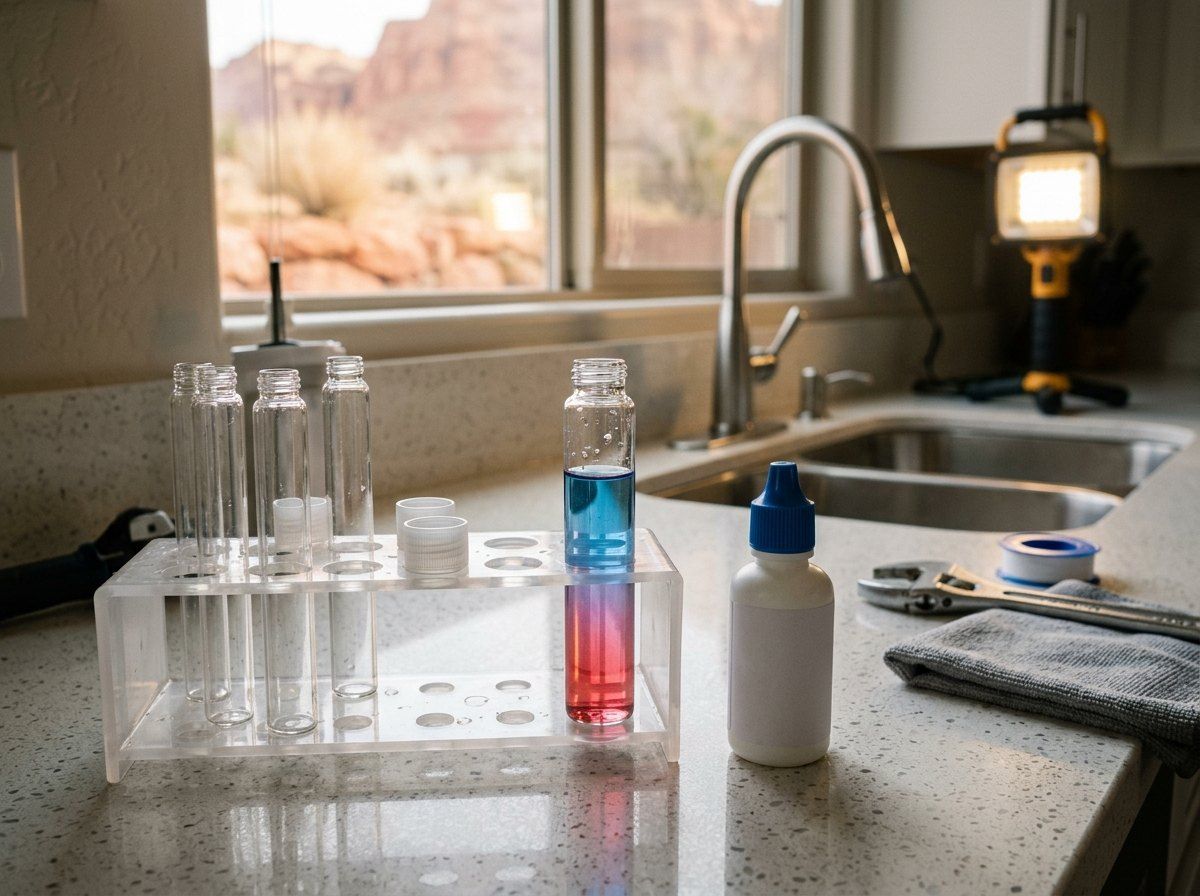
What Our In-Home Water Test Checks, and What It Doesn't
Our in-home test covers what a plumber needs to size, set and troubleshoot water treatment equipment. We measure hardness in grains per gallon, total dissolved solids, and chlorine, at the tap and before and after any softener or filter you already have.
We do not test for arsenic, lead or bacteria at your house, because a quick in-home kit cannot measure those reliably. Anyone who tells you otherwise is guessing. For those, you need a certified lab, and we will tell you how to get one.
- Hardness, raw and softened (grains per gallon)
- Total dissolved solids (TDS)
- Chlorine
- Not tested in-home: arsenic, lead, bacteria
Why We Use a Titration Kit Instead of Test Strips
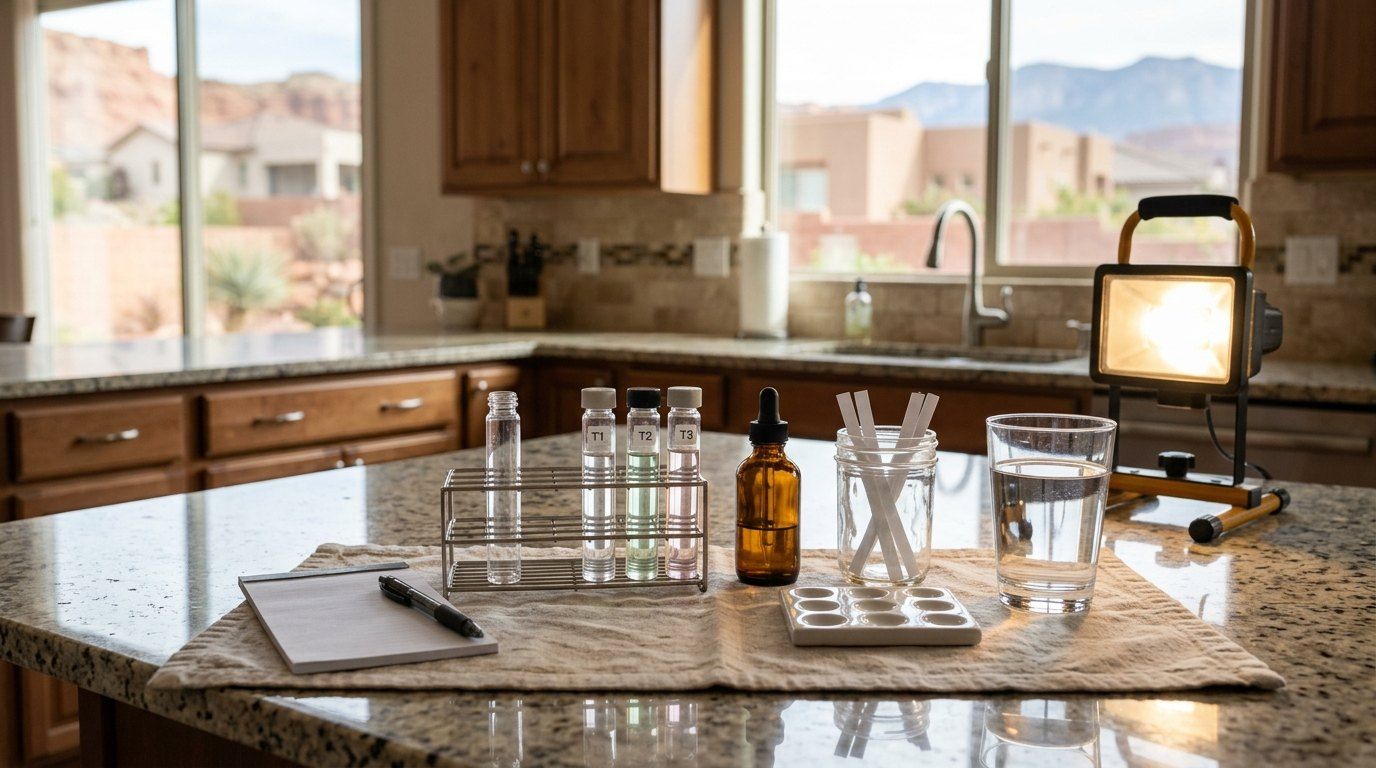
Hardness test strips give you a rough color range. That is fine for curiosity, but it is not good enough to size a softener or set it correctly. A drop titration kit gives an actual grains per gallon number: you add drops until the sample changes color, and the count is the reading.
You watch the sample change color yourself. There is nothing hidden in a back room and no machine you have to take our word for. If you want to repeat the test yourself later, we will tell you which kit we used so you can check our numbers.
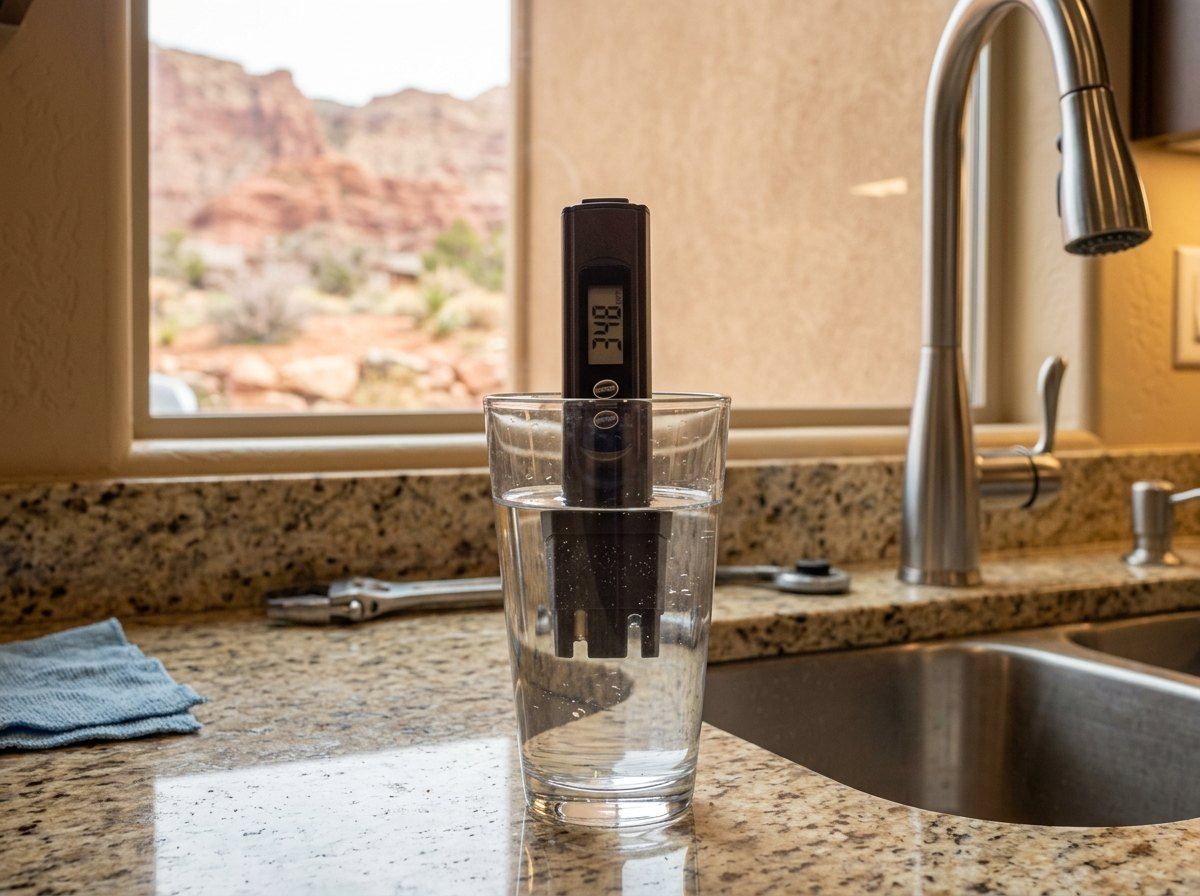
What Your TDS Reading Really Means
If you bought a TDS meter and got a number in the hundreds, you are not alone. The City of St. George reports total dissolved solids from about 118 to 936 ppm depending on the source, and most of that is minerals. High TDS affects taste and scale. It is not the same thing as unsafe water.
One more thing a lot of people miss: a softener swaps hardness minerals for sodium, so it does not lower your TDS. If someone uses a TDS meter to show your softener is not working, that test does not prove it. A hardness test does.
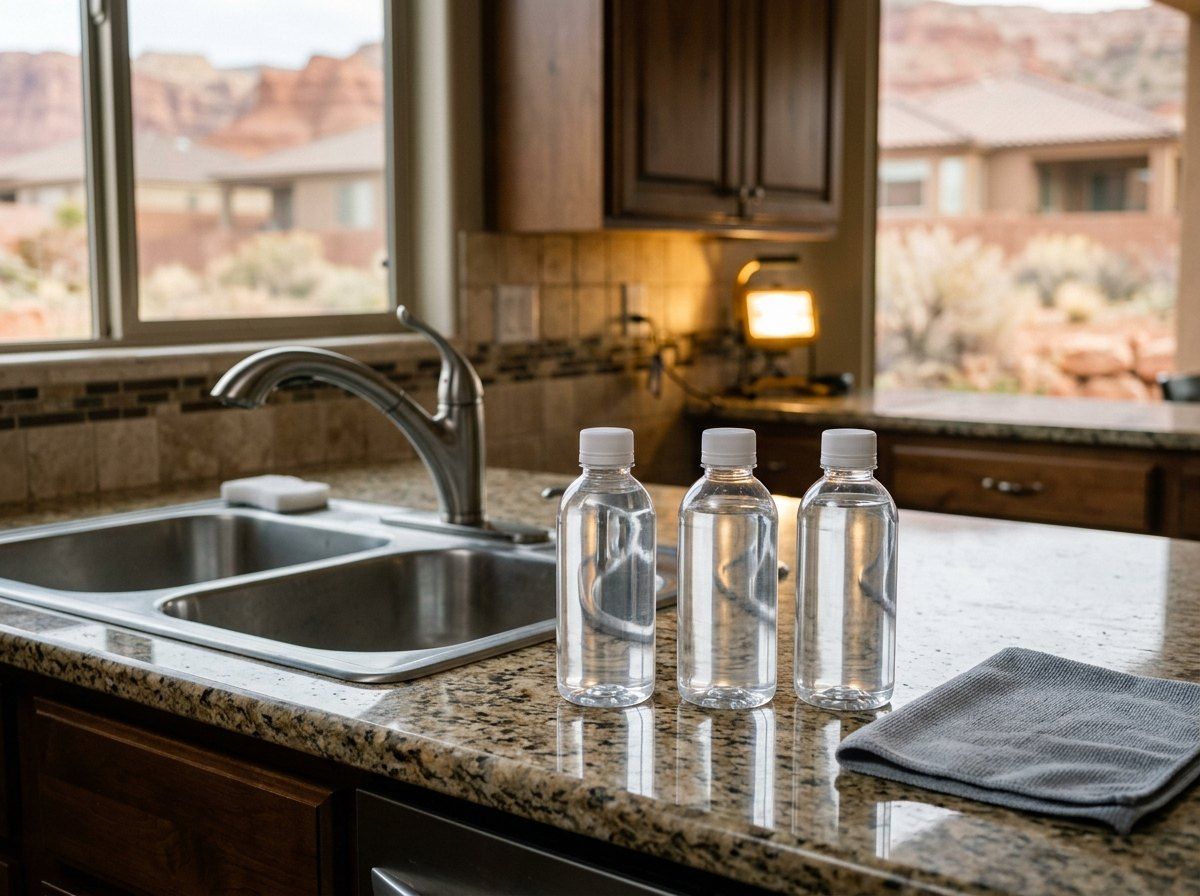
When You Need a Certified Lab Instead
If you want to know about arsenic, lead or bacteria at your tap, a certified laboratory is the right call, not an in-home kit and not a company that sells equipment. A lab test is also smart on a private well or HOA system, and after you install an RO system, to confirm it is doing its job.
We will point you to how to get an independent lab test, and if the results come back and you want help choosing equipment, we will go through them with you. We would rather you make a decision from real lab numbers than from a sales sheet, including ours.
Your Tap vs the City Water Report
The cities publish an annual water quality report, and it is a good place to start. But hardness and minerals vary by address, because cities blend water from different wells and surface sources. Washington, Hurricane and St. George water are not identical, and Kayenta is on its own private system (KWU), separate from Ivins city water.
That is why we test at your tap before setting a softener. St. George recommends settings of 13 to 24 grains in its 2024 report and asks residents to start around 18 and stay at or below 22. Ivins recommends 22. Your test tells us where in that range your house belongs.
What Happens After the Test
You get the numbers and what they mean. If your water is fine for what you care about, we say so. If your softener is set wrong, we can usually adjust it on the spot. If you need equipment, we explain the options and give you an upfront price, and you decide on your own time. Nobody needs to sign anything that day.
- In-home water testing
What People Worry About With Water Tests
Most people in St. George and Santa Clara have heard about a water test that turned into a sales visit. Here is how ours works.
Is a water test just a way to get a salesperson in my house?
A lot of advertised water tests are exactly that. Ours is a plumber testing your water so we can recommend the right thing, or nothing. We tell you what we test and the price when you book, we take the readings in front of you, and there is no presentation after.
Will you inflate the results to sell me something?
Homeowners report sending in distilled water and still being told they needed equipment. We test in front of you with clean equipment, show you every reading as we take it, and compare it to the city's published report. If your numbers look fine, we tell you that.
I'm on city water. Do I even need a test?
For safety basics, the city's annual water quality report is a good start, and you can read it free. Where an in-home test helps is setting your softener to the right number for your address and checking whether it is actually softening. If you do not have a softener and are not planning one, you may not need us.
How do I know how much arsenic is coming out of my tap?
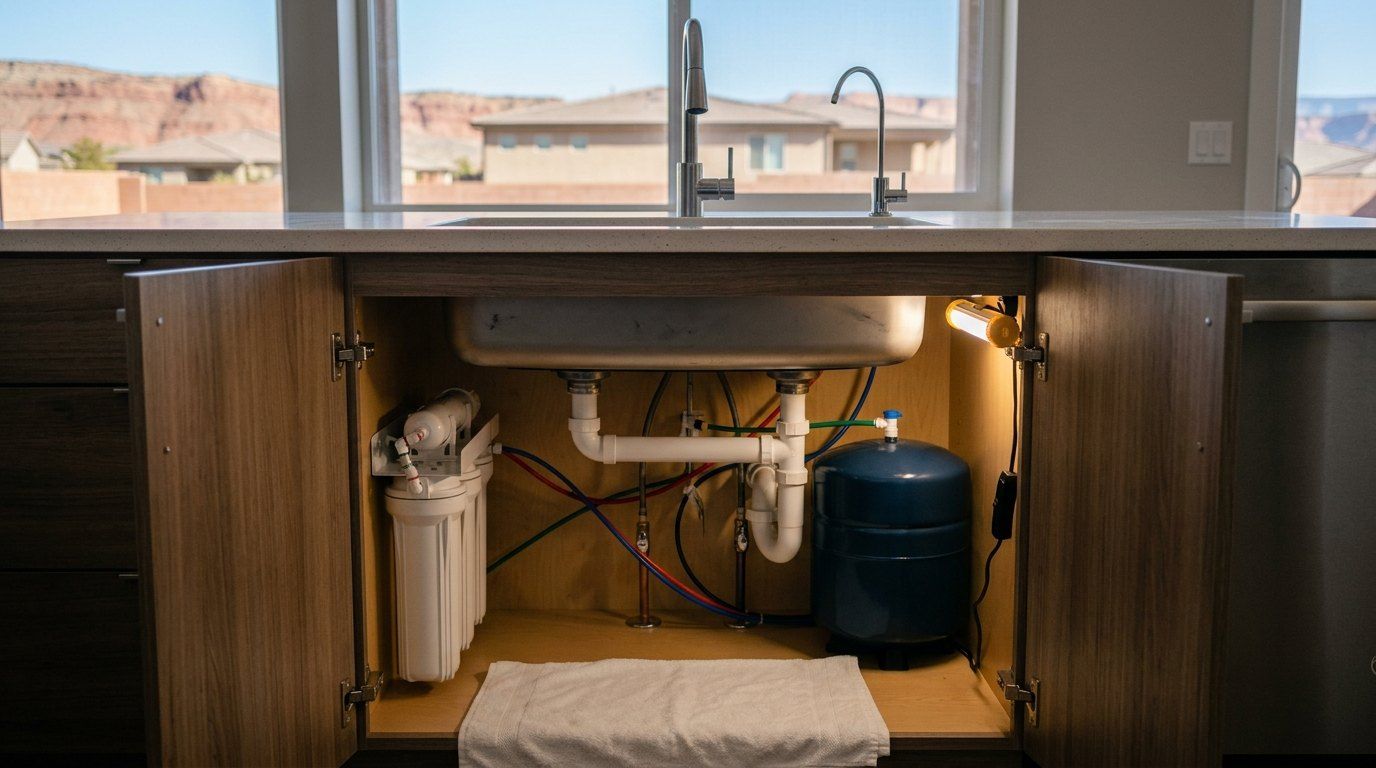
Arsenic needs a certified lab test. An in-home kit cannot tell you. The city publishes its arsenic ranges and averages every year and stays under the limit by blending and treatment. If you install an RO system for peace of mind, a lab test afterward confirms it is working.
Is my softener actually softening?
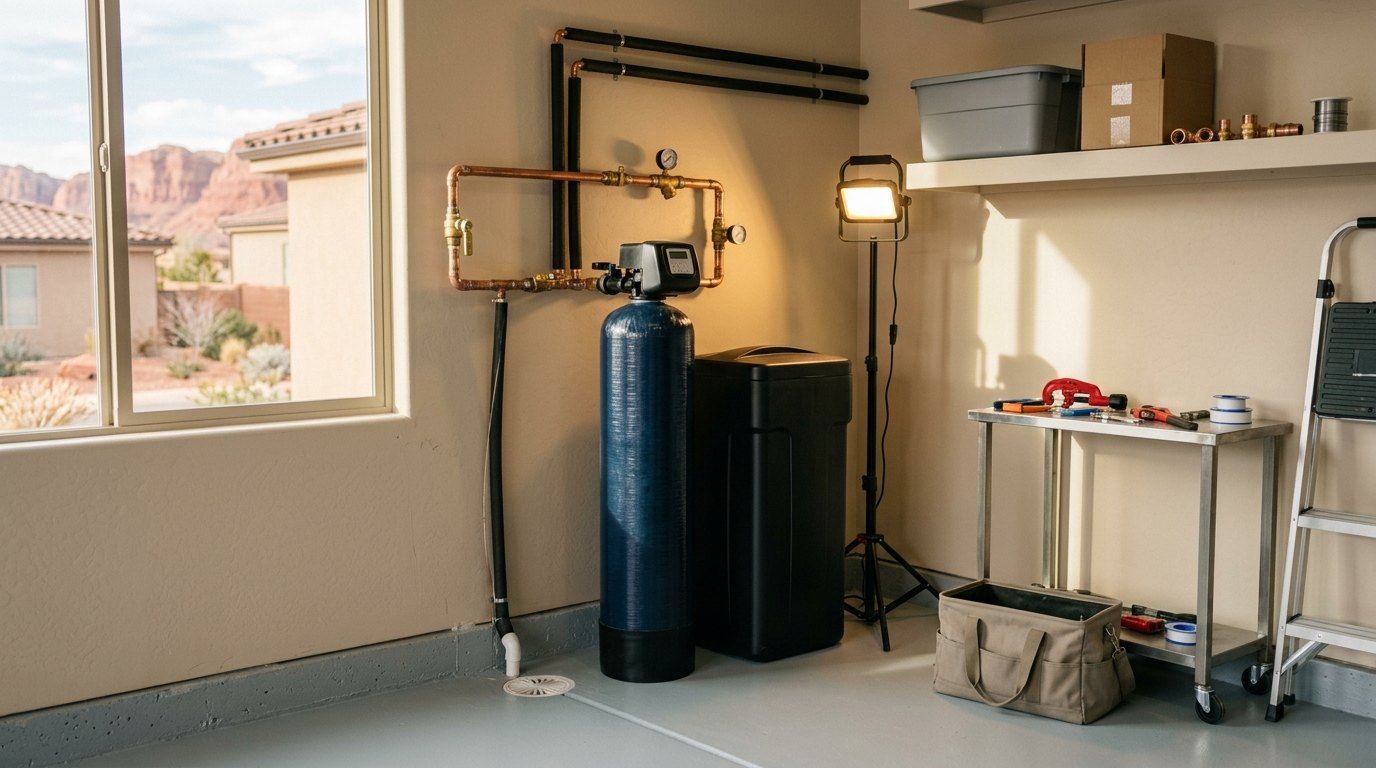
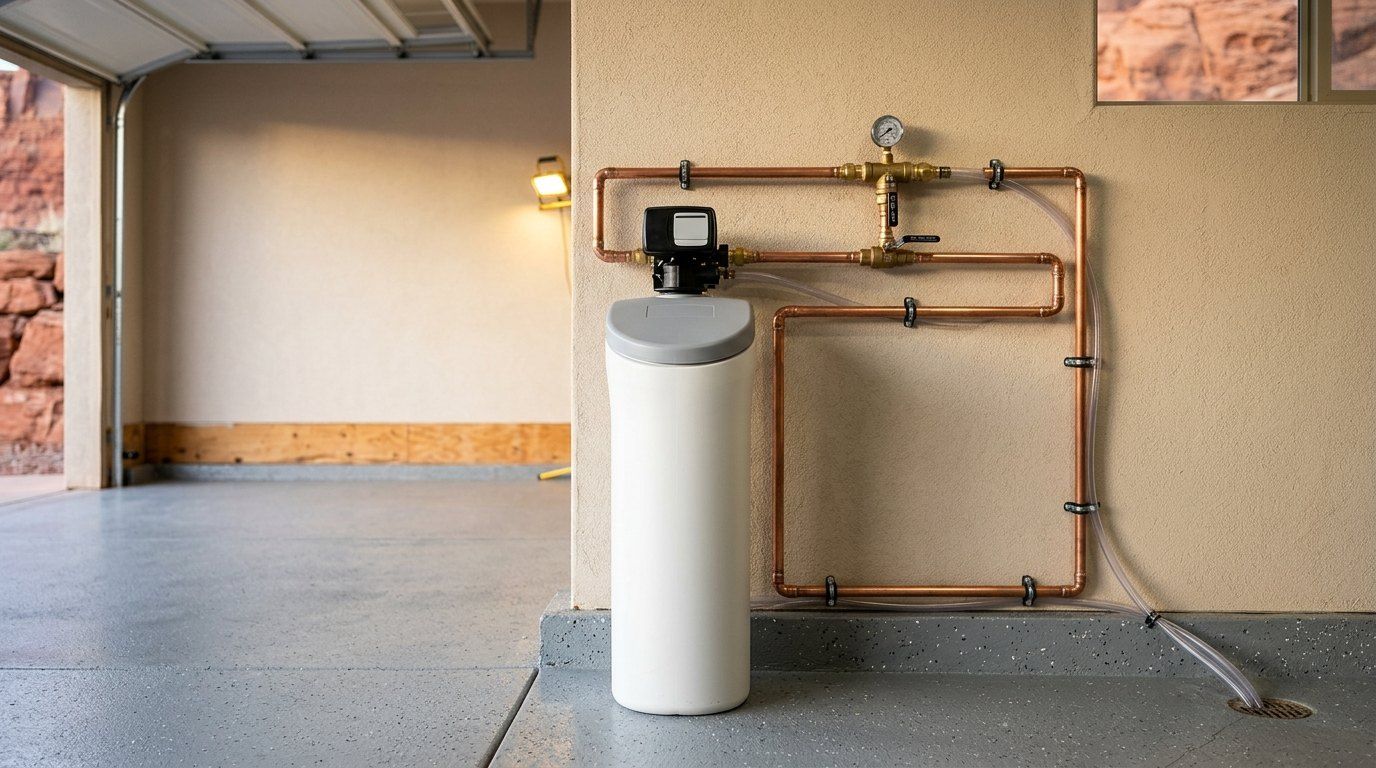
A hardness test before and after the softener answers that in minutes. Softened water should read close to zero. If it does not, the hardness setting, the salt, the brine draw or the resin is the problem, and we can usually tell which on the same visit.
Why would both of us have to be home for a test?
You do not. Requiring both spouses is a sales tactic so nobody can say "let me talk it over." One adult at home is all we need, and the visit is about testing your water, not a presentation.
Water Testing: common questions
Is a free water test legit?
Many homeowners report that a free test turned into a long in-home sales pitch. Before anyone comes out, ask what they test, how long it takes, and whether there is a presentation. We tell you our price when you book and skip the presentation.
How much does your water test cost?
We tell you the price when you book, before anyone comes to your house. No surprises at the door.
Can I test my own water?
Yes. A drop titration hardness kit and a TDS meter are inexpensive and good for checking a softener. For arsenic, lead or bacteria, use a certified lab.
Does St. George publish water quality data?
Yes. The city publishes an annual water quality report with ranges for arsenic, dissolved solids, sodium and more, and it recommends softener settings of 13 to 24 grains per gallon.
Should I test for lead in an older home?
If your home has older plumbing or solder, a lab test is the only reliable way to know. An in-home kit will not tell you, and we will not pretend it does.
Related services