Water Softener Installation in St. George, UT
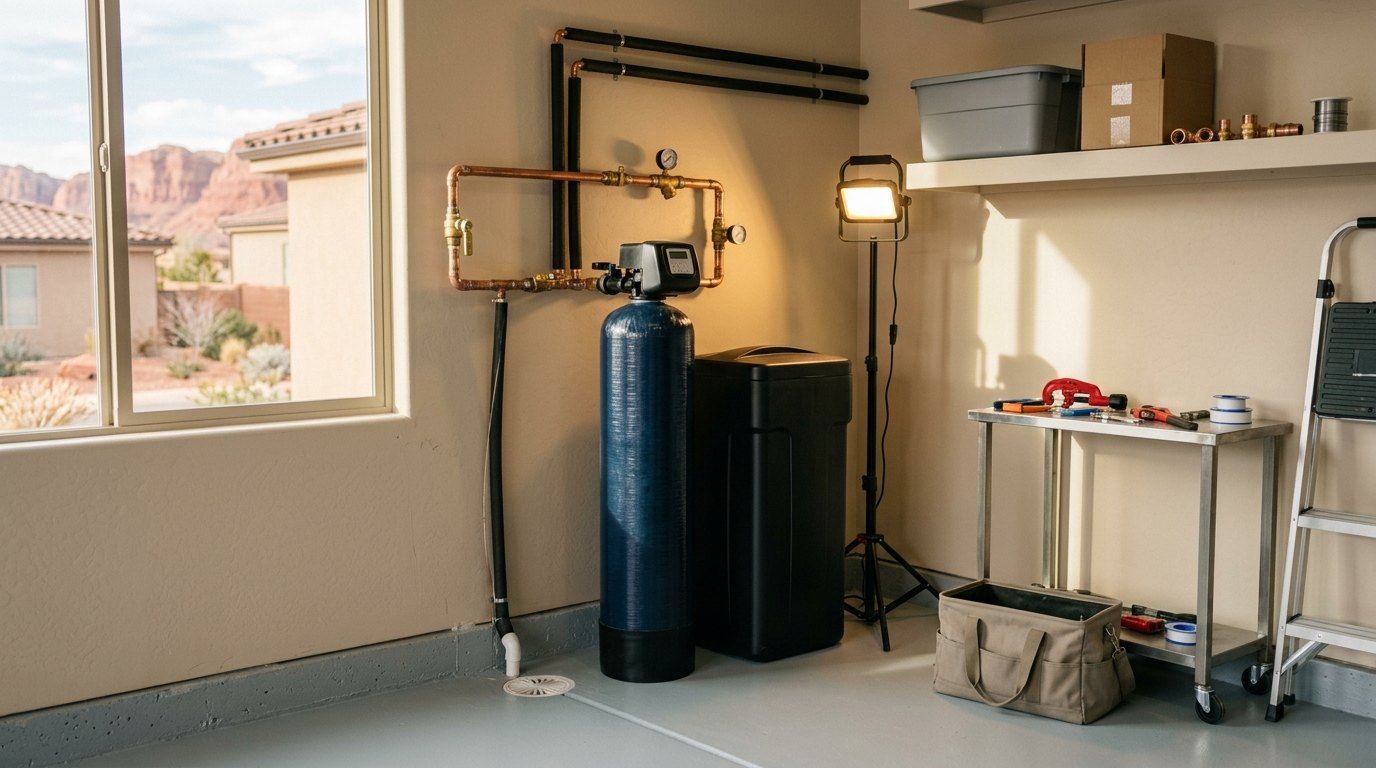
Water softener installation in St. George should come with a clear, itemized price, not a bundled number you have to decode, so we tell you exactly what your install includes before any work starts. The biggest thing that changes the price is whether your home already has a softener loop. We size the softener for your hardness and household, plumb it with a bypass and a proper drain, set it to the city's guidance, and test for leaks before we leave.
- Itemized install price: existing loop vs new loop
- Sized for your hardness and family, not upsold
- Bypass, drain and air gap done to code
- Leak checked and set to city guidance before we leave
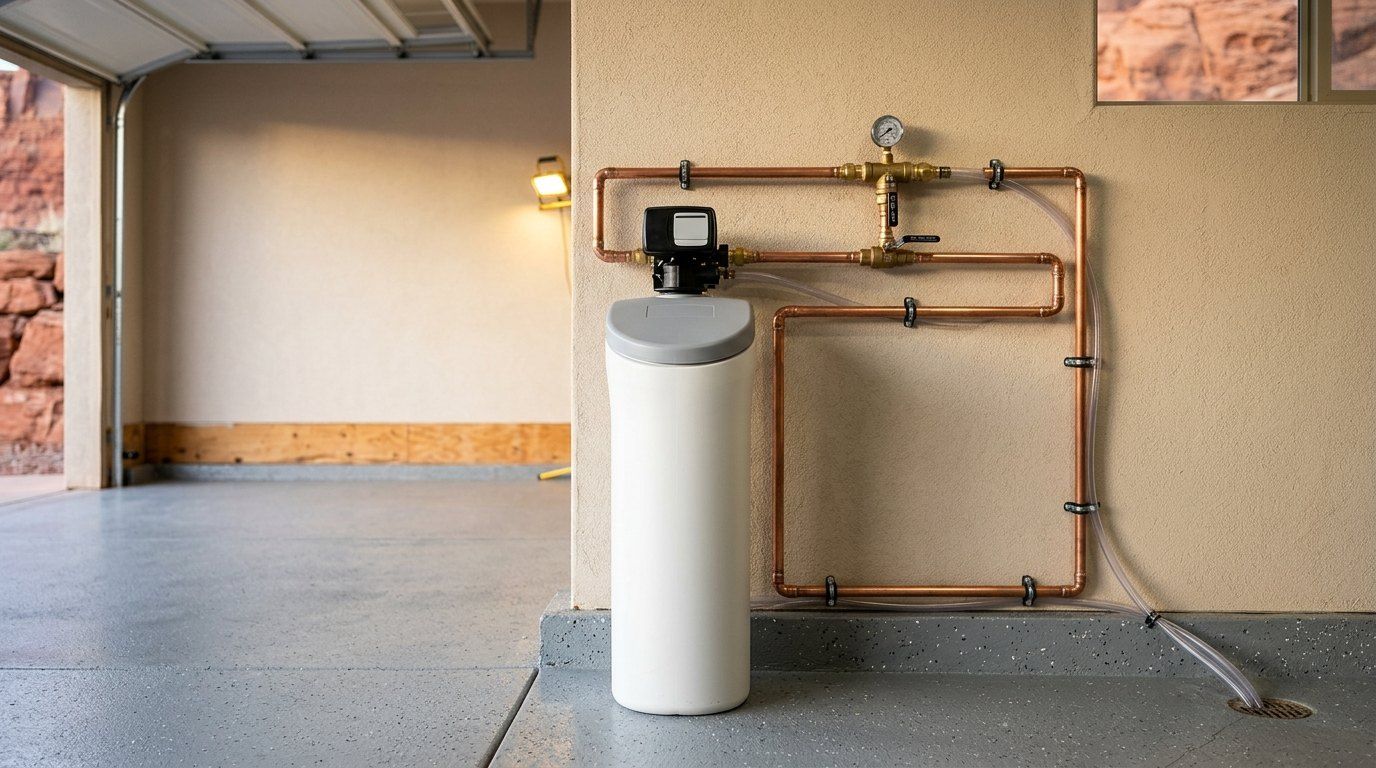
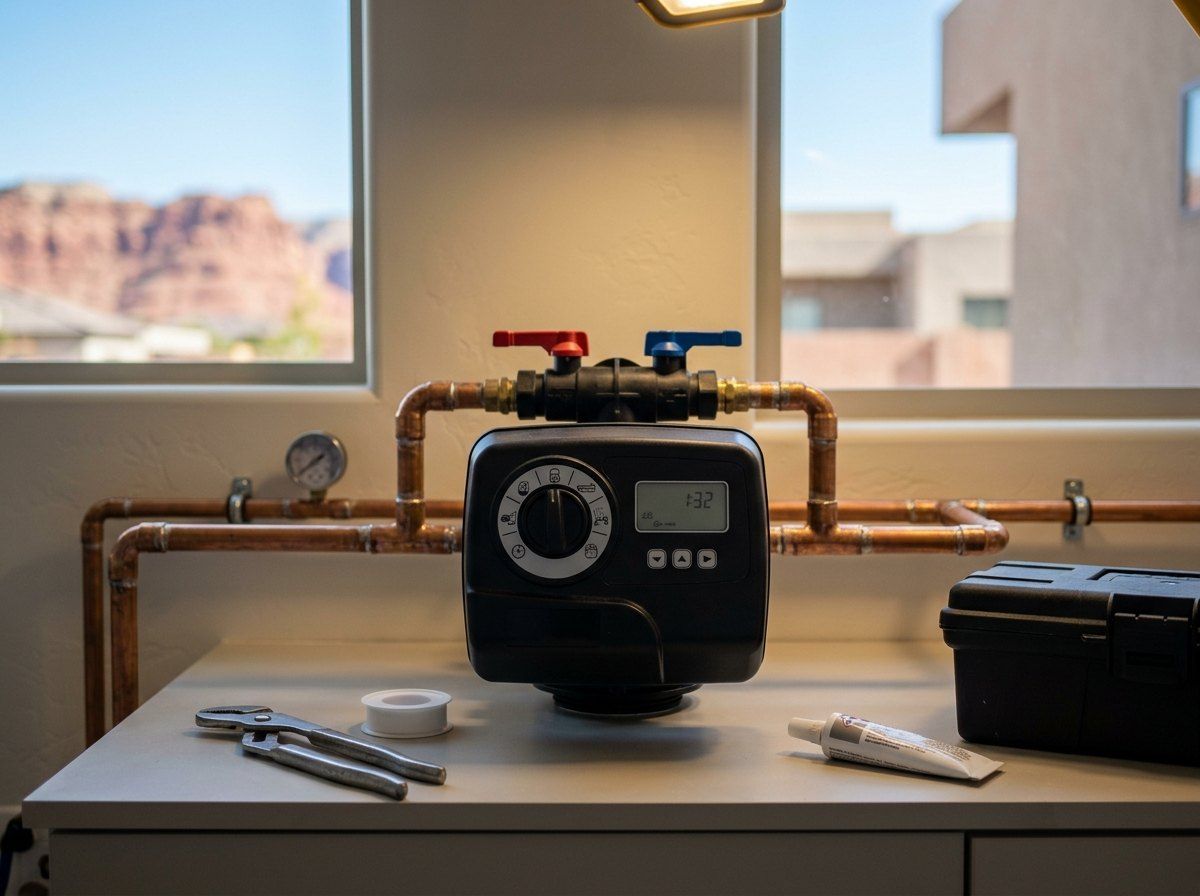
What Our Softener Installation Includes
An install is more than setting a tank on the floor. Most softener problems we get called to fix trace back to a rushed hookup: a missing air gap, a leaking fitting, or a unit set to the wrong hardness. Here is what we do on every installation, so you can compare it line by line with any other quote.
- Confirm the softener loop, or quote building one
- Check sizing against your tested hardness and water use
- Install a bypass valve so you keep water during service
- Run the drain line with a proper air gap
- Fill the brine tank, program the valve and run a regeneration
- Set hardness to the lowest setting that keeps water soft
- Leak check every connection and haul away the old unit
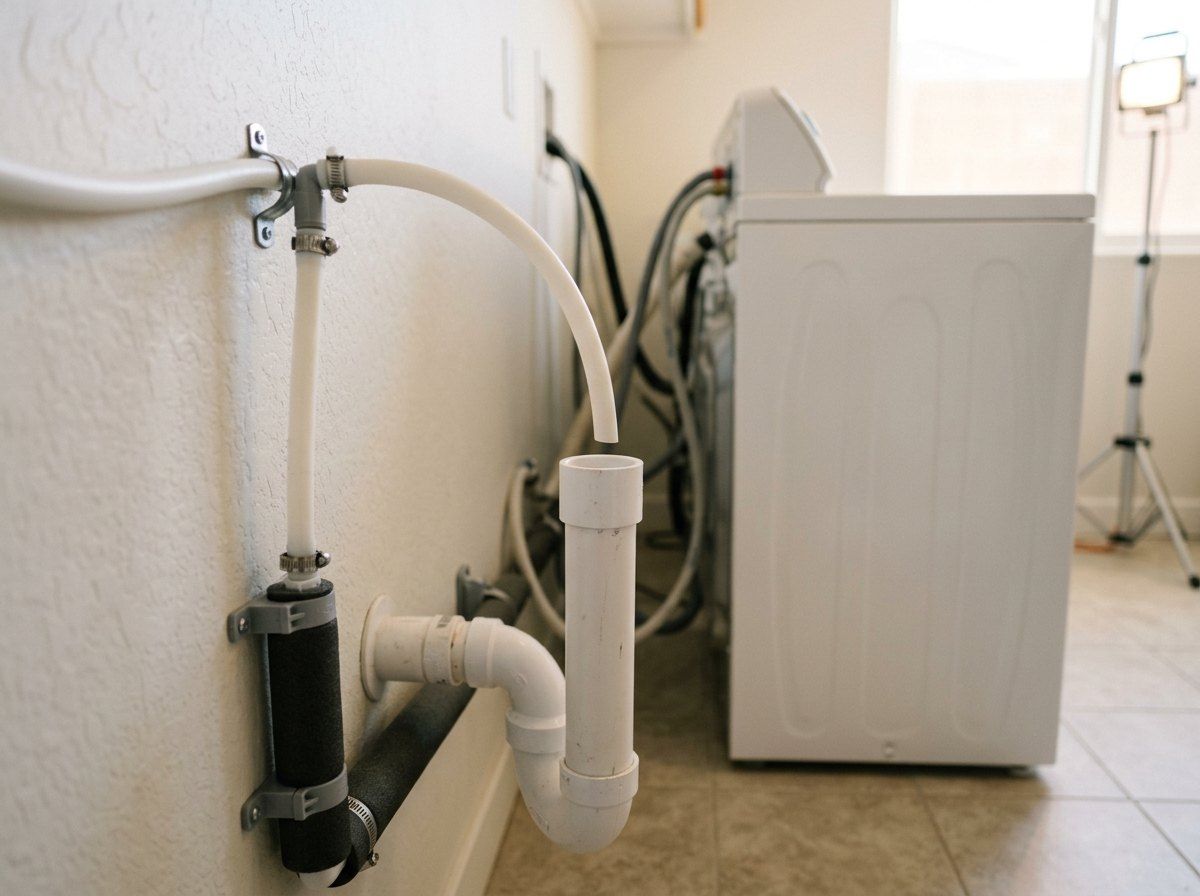
The Drain, the Air Gap and the City's Reuse Water
Every softener sends rinse water to a drain when it regenerates. That drain needs an air gap, a physical space between the softener's drain line and the drain itself, so wastewater can never back up into the unit that treats your house water. Skipping it is one of the most common shortcuts we see.
Where that water goes matters in St. George too. Softener salt raises the dissolved solids in the city's wastewater, and that water gets reused for irrigation. The city asks residents to set softeners at about 18 grains and no higher than 22, so we set yours as low as your water allows.
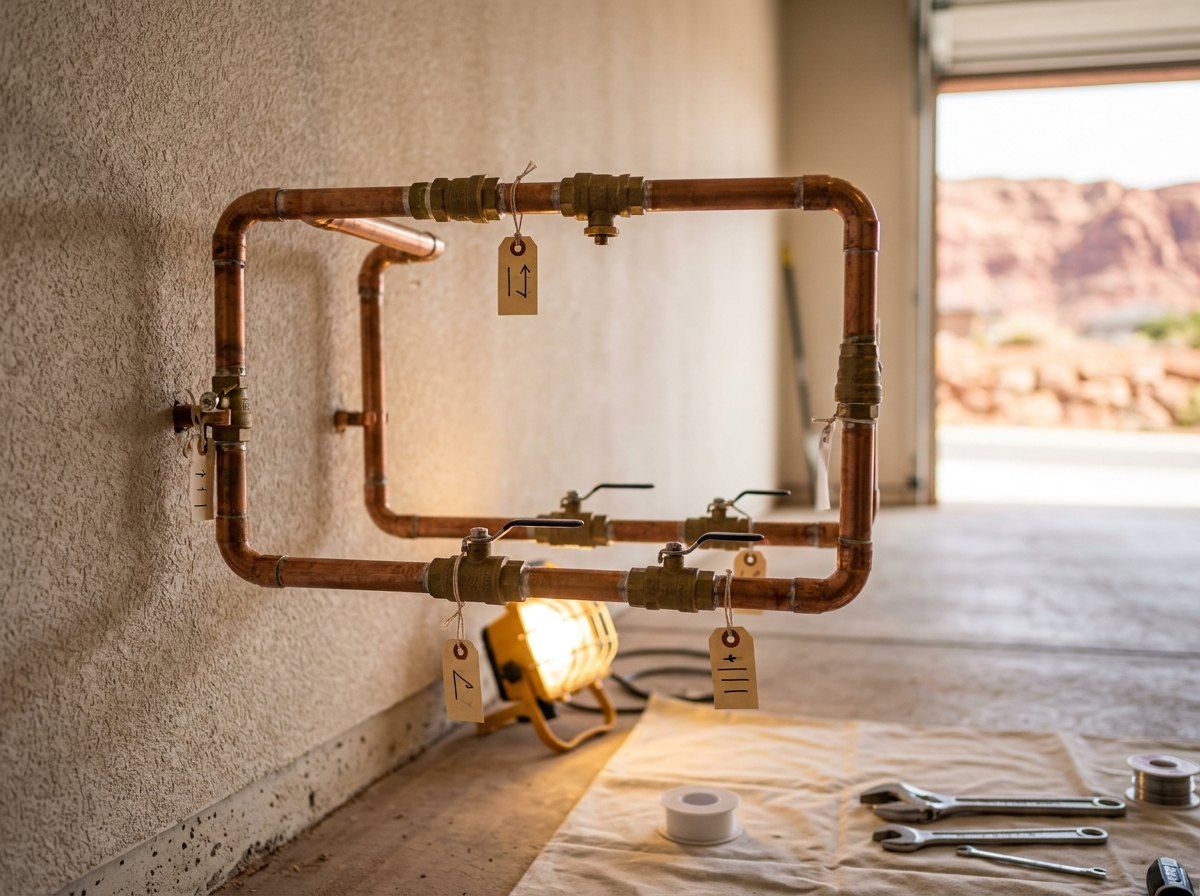
Replacing an Old Softener
Before we quote a replacement, we check whether your current softener can be repaired. A standard control valve can often be rebuilt and old resin replaced for less than a new system. When the valve is obsolete, the parts are proprietary, or the tank is cracked, replacement is the better money and we say so.
On a replacement we reuse your existing loop and drain when they are in good shape, fix them when they are not, and haul the old unit away. Homes in Santa Clara and Ivins with older systems often need a new bypass valve too, and we tell you that up front.
Do You Need a Carbon Filter in Front of It?
On chlorinated city water, a carbon filter ahead of the softener takes out chlorine taste and smell for the whole house and helps protect the softener resin. It is an option, not a requirement. If you are happy with how your water smells and tastes and want to keep the price down, a softener alone is fine.
If you do add one, the order matters: sediment filter first if you need one, then carbon, then the softener. Drinking water filtration like reverse osmosis goes at the kitchen sink, after all of it. We plan the layout so each piece has its own shutoff and you can change filters without a plumber.
A Softener Does Not Need an RO System to Work
Some homeowners have been told a softener will fail without a reverse osmosis system because the water will eat the resin. That is not how it works. A softener is built to treat the raw water coming into your house. Reverse osmosis is a separate drinking water filter for one faucet.
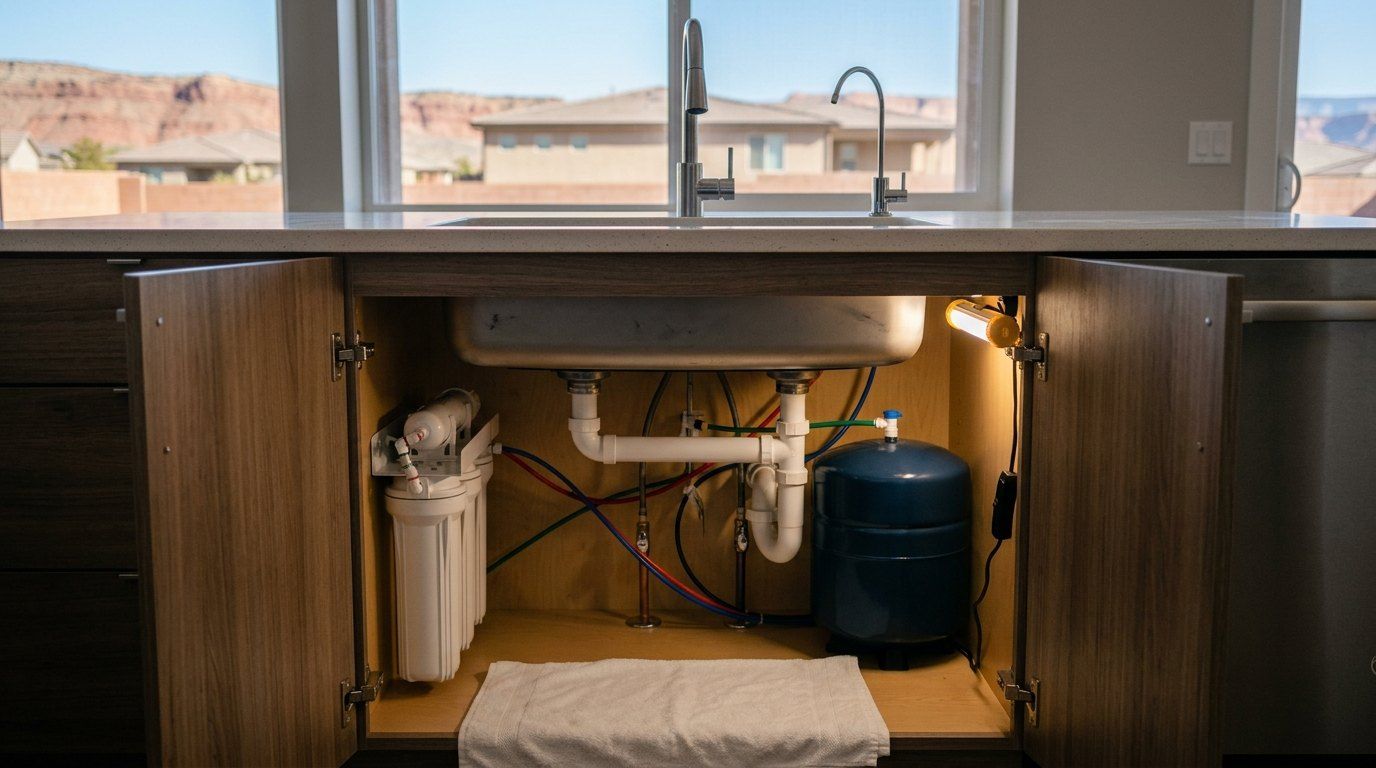
Plenty of people want both, and that is a reasonable choice in Southern Utah. But it is a choice about drinking water, not a requirement for the softener. We will install one, the other or both, and explain what each one actually does for you.
What Install Day Looks Like
On a home with an existing loop, owners commonly report an install taking about two to three hours. Building a new loop, running a drain, or rerouting the main takes longer, and we tell you that before we start. Your water is off only while we cut in, and the bypass valve means you never have to shut the house down for softener service again.
Before we leave, we run water through the system, check every joint for leaks, and show you the bypass, the salt level and how to start a manual regeneration. We clean up the garage and take the old unit with us.
- Water softener installation
- Water softener replacement
Common Worries About a Softener Install
What homeowners in St. George, Washington and Hurricane ask before they book an installation.
What should installation cost on top of the softener?
It depends mostly on whether a softener loop already exists, how far it is to a drain and power, and whether the main line has to be cut and rerouted. Hooking up to an existing loop is a much smaller job than building a new one. We give you an itemized quote so you can see which one you are paying for.
Can I buy my own softener and just pay you to install it?
Send us the make and model first. We will tell you before booking whether we can install it, and we will explain how warranty works when you supply the equipment. If you would rather we supply it, we recommend standard, serviceable equipment and show you the equipment price and the labor separately.
Is my house already plumbed for a softener?
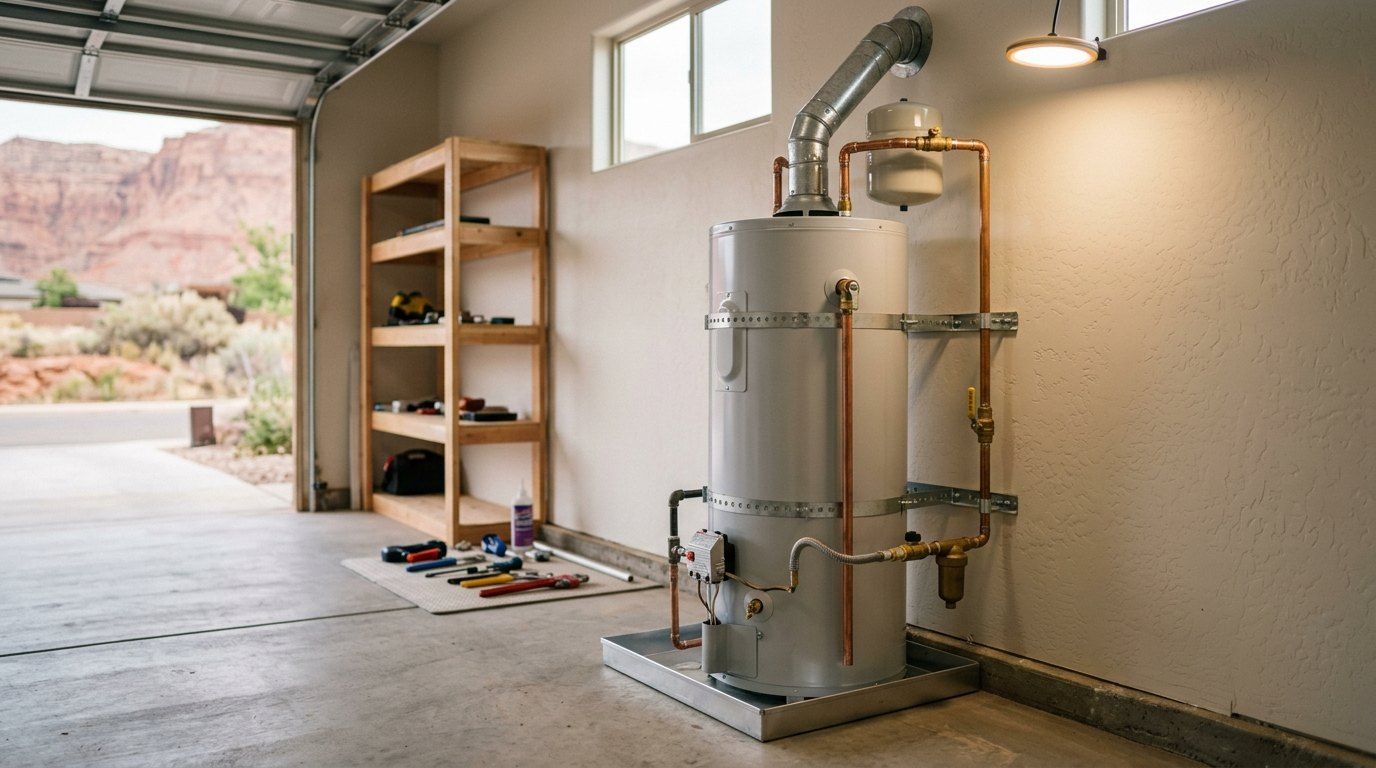
Most newer homes around St. George have a softener loop in the garage, usually near the water heater or where the main comes in. It looks like two capped pipes or a looped pipe on the wall. Text us a photo and we can usually tell you. If there is no loop, we quote what it takes to add one.
Which taps should be on the softener?
Usually the whole house except the hose bibs and irrigation, so your plants get hard water. If you do not want to drink softened water, add a reverse osmosis faucet at the kitchen. Decide this before the install, because changing it later can mean opening walls.
Can a softener go in a hot garage or outside?
Softeners are generally meant to stay out of direct sun and within roughly 35 to 100 degrees, and St. George garages get hotter than that in summer. We look at shade, placement and covers to protect the tank and the electronics, and we tell you if a different spot would be smarter.
How big a softener do I need?
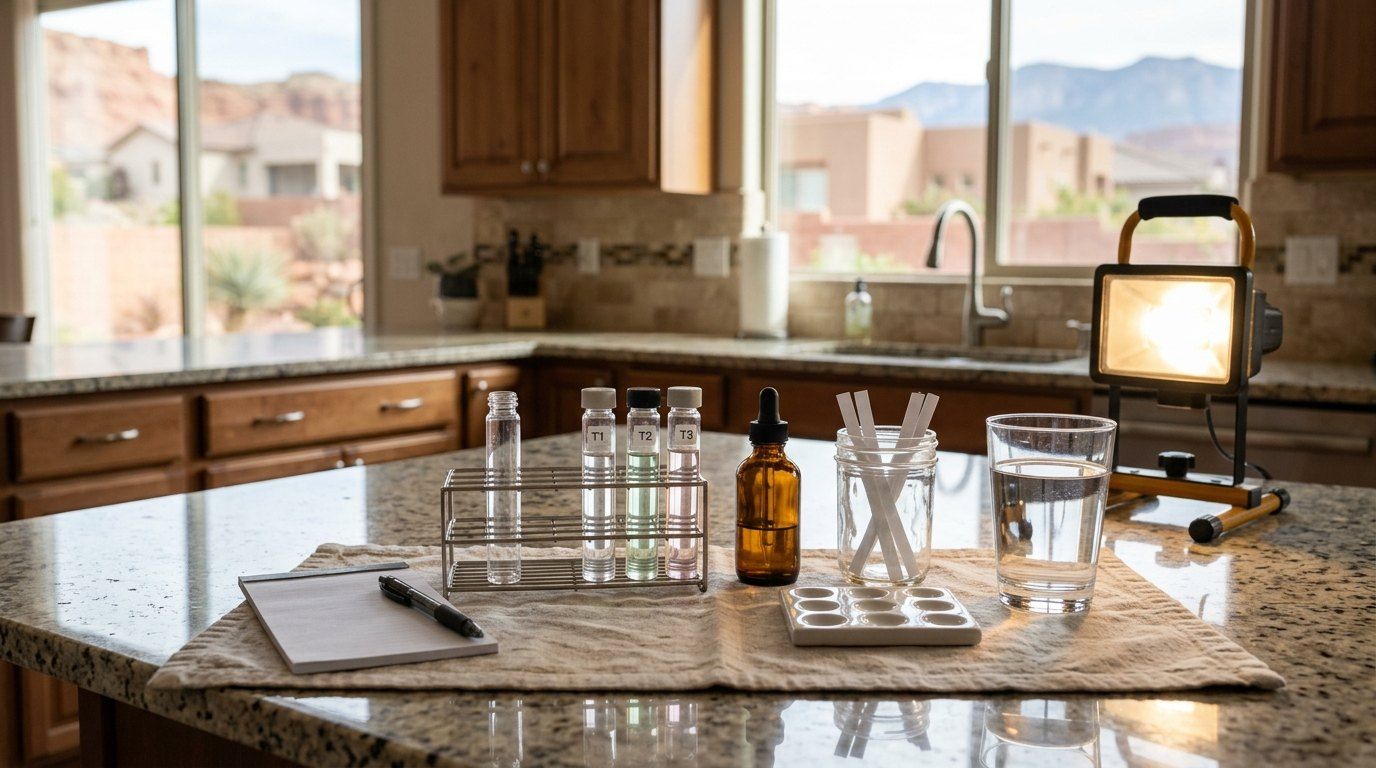
Size comes from your hardness times how much water your household uses. With water as hard as ours, an undersized softener regenerates constantly and wastes salt and water, and an oversized one costs more than it needs to. We test your hardness and do the math with you, not for you.
Water Softener Installation: common questions
The water feels slippery after the install. Is something wrong?
That slick feel is normal for soft water, but it should not be extreme. Often the hardness is set higher than your water needs, and dialing it in helps. A new smell usually means the system was not flushed fully or the regeneration timing is off, and both are quick fixes.
Can I install a softener myself?
If you already have a loop and you are handy, it is doable. The common DIY mistakes are a missing air gap, the flow direction reversed, leaking fittings, and resin escaping into the house lines. If you need a new loop or the main has to be cut, call a plumber.
What if I see little beads in my faucets after an install?
Those are resin beads from the softener tank, and they mean something inside the tank is not holding them in. Put the softener in bypass and call us. We find the cause and clean the beads out of the aerators and lines.
What grain setting will you use?
We test your water and follow city guidance: about 18 grains in St. George and no higher than 22 unless testing shows you need it, or 22 in Ivins. Kayenta is on its own water system, so we test there before setting anything.
Will you take my old softener?
Yes. On a replacement we disconnect the old unit, haul it away, and leave the garage clean.
Related services