Leak Detection and Slab Leak Repair in St. George, UT
Most leak detection calls in St. George start the same way: the water bill jumps, and you want to know if it is really a slab leak or just a running toilet or an irrigation line. You can rule out the easy stuff yourself with the water meter test below. If the meter still moves, we find the leak with listening and thermal equipment before we open anything, then give you an upfront price for each repair option so you choose.
- Do the water meter test first, it is free
- We pinpoint the leak before breaking any floor
- Spot repair or reroute, priced side by side
- Photos and a written report for your insurance claim
Do the Water Meter Test Before You Call
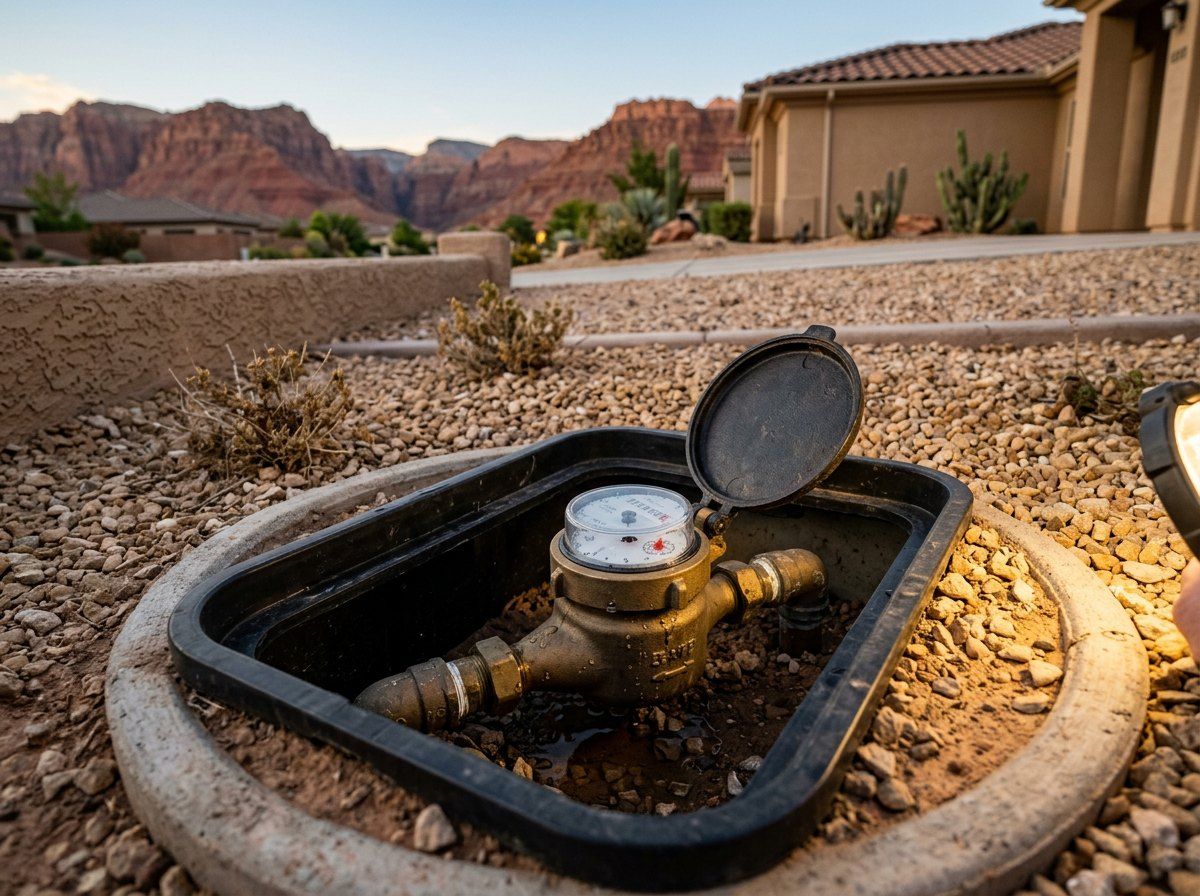
Turn off every faucet, appliance and the irrigation. Then look at the meter in the box near the street. Most have a small leak indicator, a triangle or dial, that spins when any water is flowing. If it moves with everything off, water is going somewhere.
Next, rule out the common stuff. Put a few drops of food coloring in each toilet tank and wait 15 minutes without flushing. Color in the bowl means a leaking flapper. Then close the irrigation shutoff and watch the meter again. If it stops, the leak is in the sprinklers, not the house.
- Everything off, including irrigation
- Watch the leak indicator on the meter
- Dye test each toilet tank
- Close the irrigation shutoff and check again
How We Pinpoint the Leak
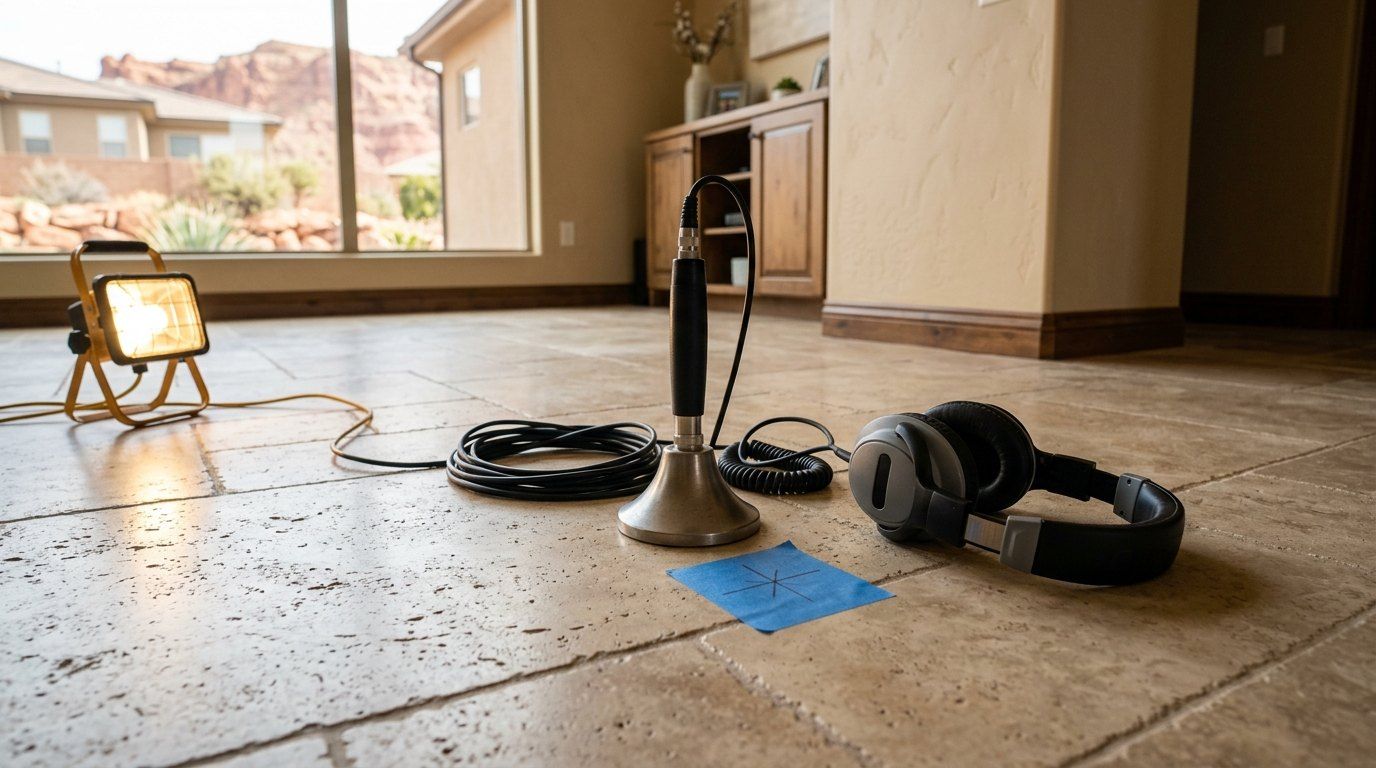
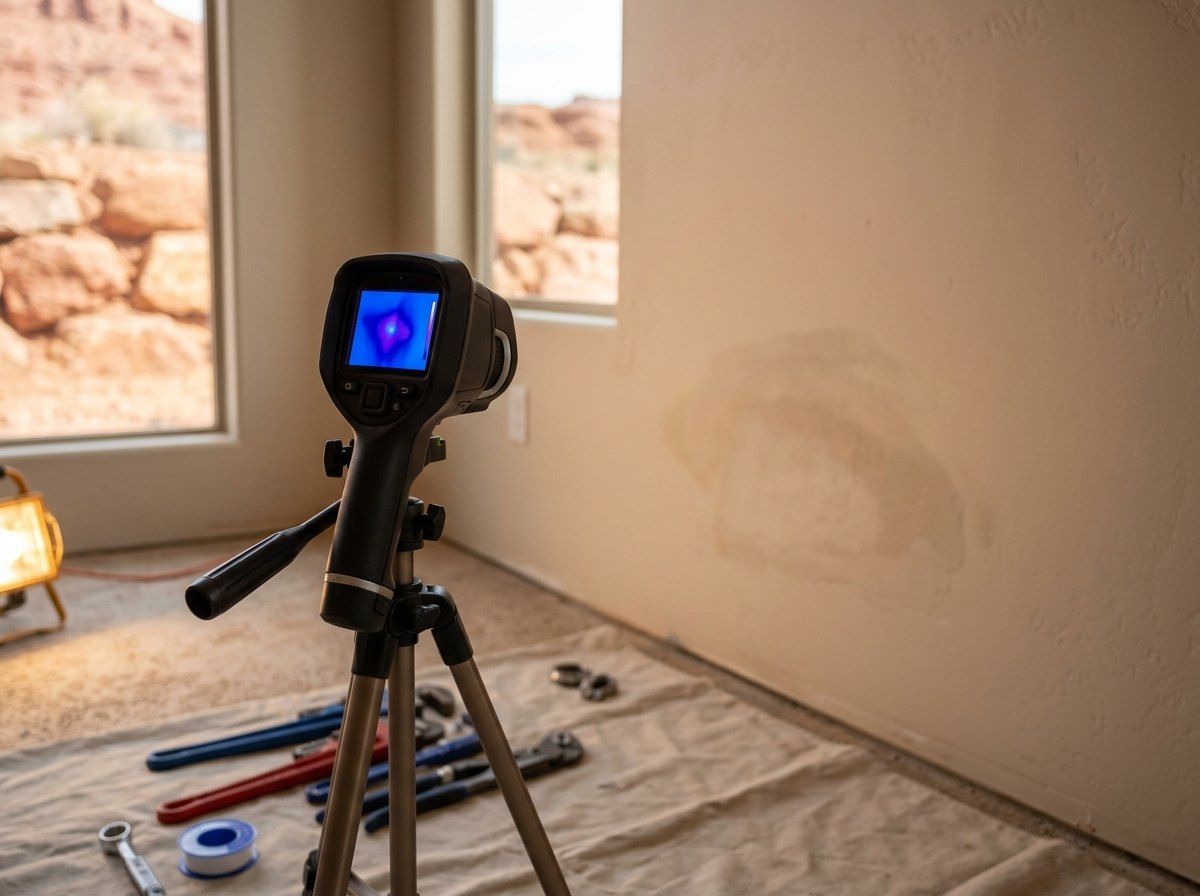
We start by isolating the system: hot side or cold side, inside or out. A leak on the hot side often shows up as a warm spot. Then we use acoustic listening equipment to hear where pressurized water is escaping, thermal imaging to see heat or cooling patterns in floors and walls, and line tracing to follow the pipe route under the slab.
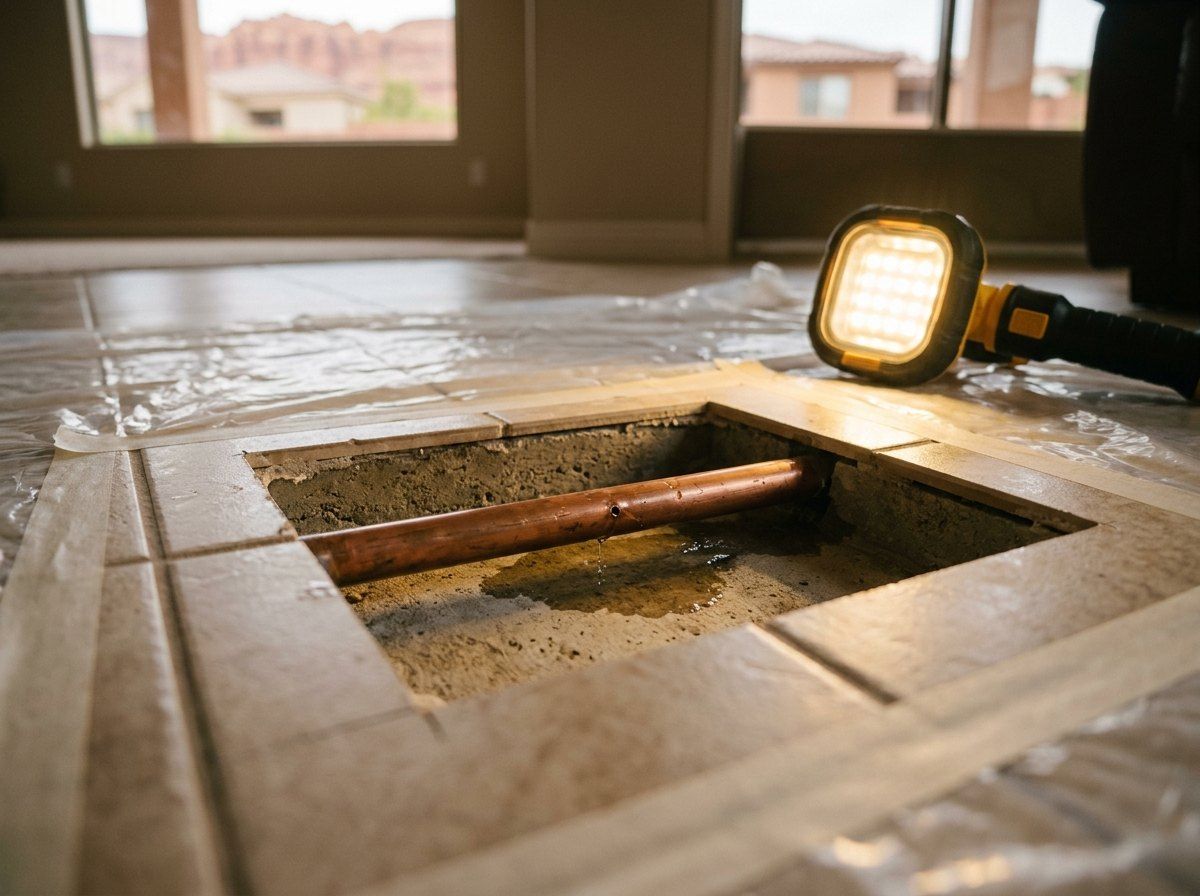
We cross-check those methods before we mark a spot. One reading alone is how companies end up breaking concrete in the wrong place. If we open the floor, the opening is small and targeted, and we tell you before we start what happens if the first opening misses.
When It Is Not Your First Slab Leak
A second leak in old copper under the slab usually means the rest of the pipe is in similar shape. Patching one spot fixes that spot, but the pipe a few feet away is the same age and has been in the same soil and water.
That is when a reroute or repipe starts to make more sense than another patch. A reroute leaves the old line under the slab and runs new pipe through the walls or attic. We price both so you can compare.
Why Slab Leaks Are Common in St. George Homes
Most homes in Washington County are built on a concrete slab, with the water lines running underneath. Local plumbers point to three things that wear those lines out: our very hard water, shifting desert and clay soils, and copper pipe sitting in direct contact with that soil.
Homes plumbed with newer PEX tend to have fewer of these problems. Older homes with copper under the slab, which we see a lot of in St. George, Santa Clara and Washington, are where slab leaks show up most, and where a second leak tends to follow the first.
Leaks in Homes That Sit Empty
If you spend part of the year away, a slab leak can run for weeks before anyone notices. Nobody is home to hear it or feel the floor. Desert heat can also hide a warm spot in summer, so the tile feels normal even when a hot line is leaking underneath.
Before you leave, shut off the main if you can. A leak sensor or a shutoff you can control from your phone is worth thinking about too. When you come back, do the meter test before turning everything on, so you know right away if something changed while you were gone.
- Plumbing leak detection
- Plumbing leak repair
- Slab leak detection & repair
What People Worry About Before Calling for Leak Detection
Hidden leaks make people nervous for good reason. Nobody wants to pay to find nothing, or watch their floor get broken for no reason. Here are the worries we hear most.
Is it really a slab leak, or just a toilet or the sprinklers
Often it is not a slab leak. Do the meter test with everything off, dye test the toilets, and close the irrigation shutoff. If the meter stops at any point, you found it. If it keeps moving with all of that ruled out, that is when it is worth paying for leak detection.
One spot on my floor is always warm
A warm spot usually means a hot water line is leaking under the slab and heating the concrete. That leak runs all day and night, and so does your water heater trying to keep up. It is worth getting checked soon.
They will tear up my whole floor just to look
No. We locate the leak with acoustic and thermal equipment and trace the line first. We only open the floor once more than one method points to the same spot, and then it is a small targeted opening. Sometimes we recommend a reroute that avoids opening the slab at all.
Spot repair, reroute or full repipe: which one
A spot repair fixes one leak, but the rest of the old pipe under the slab is the same age. A reroute abandons the under-slab line and runs new pipe through walls or the attic. We give you an upfront price for each so you can choose with real numbers.
Will homeowners insurance pay for it
It depends on your policy. Many cover the water damage and sometimes the cost of getting to the pipe, but often not the pipe repair itself. Call your agent. We can share photos and notes of what we found to help with the claim.
Paying for detection and getting no answer
Ask us before we come out. We tell you what the detection visit costs and what happens if the leak cannot be pinpointed, so you know before you book. That is also why we have you do the meter test first, so you are not paying to find a running toilet.
Leak Detection: common questions
I hear water running but every faucet is off. What does that mean?
That sound with everything off is a common sign of a pressurized leak in a wall or under the floor. Shut off the main if you can and watch the meter. If the meter stops when the main is off, the leak is inside the house, so give us a call.
Can a slab leak wait a few weeks?
It is usually not a middle-of-the-night emergency unless water is coming up through the floor. But it runs constantly, adds to your bill every day, and can soak the soil and flooring. Get it looked at soon, not in a few weeks.
Do you repair the leak too, or just find it?
Both. Once the leak is located, we explain the repair options, give you an upfront price for each, and do the repair you choose. Leaks in walls and ceilings are handled the same way.
Do newer homes get slab leaks?
Less often. Homes plumbed with PEX tend to have fewer slab leaks than older homes with copper under the slab. Any home can still leak at a fitting or from damage, so the meter test is worth doing whenever your bill looks off.
Is epoxy pipe relining a good option?
Some companies offer it. One concern plumbers raise is that there is no easy way to verify the lining worked until it is done, and warranty terms vary. Ask us and we will explain the options we offer for your house and why.
Related services